|
Kinabalu National Park or
Taman Negara Kinabalu in Malay, established as one of the first
national parks of Malaysia in 1964, is Malaysia's first World
Heritage Site designated by UNESCO in December 2000 for its
"outstanding universal values" and the role as one of the most
important biological sites in the world.
Kinabalu Park, the entrance to Mt Kinabalu, is located at 1,585
metres above sea level and is the main starting point for the summit
trail that leads to the top of Mt Kinabalu. As the keeper of the
treasures of Mt Kinabalu, Kinabalu Park showcases an eco-system
unrivalled anywhere else in the world. A 2 hour journey from Kota
Kinabalu, the visitors to Kinabalu Park can experience cool climates
and rich varieties of fauna and flora in Malaysia' first World
Heritage Site.

It has a very wide range of habitats, from rich tropical lowland and
hill rainforest to tropical mountain forest, sub-alpine forest and
scrub on the higher elevations. It has been designated as a Centre
of Plant Diversity for Southeast Asia and is exceptionally rich in
species with examples of flora from the Himalayas, China, Australia,
Malaysia, as well as pan-tropical flora.
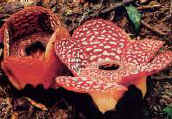 More
than 1,200 species of wild orchids and 40 species of oaks can be
found in the park. The world's largest flower, the Rafflesia, is
found from 600 to 1,000 metres above sea level on the pri�mary
forest floor. Other unusual flora include the nepenthes pitcher
plant which digests insects; the Dawsonia; the worlds largest moss
and Low�s Rhododendron, whose flowers can reach 30cm in width. More
than 1,200 species of wild orchids and 40 species of oaks can be
found in the park. The world's largest flower, the Rafflesia, is
found from 600 to 1,000 metres above sea level on the pri�mary
forest floor. Other unusual flora include the nepenthes pitcher
plant which digests insects; the Dawsonia; the worlds largest moss
and Low�s Rhododendron, whose flowers can reach 30cm in width.
Mountain ground squirrels and tree shrews can often be seen in the
scrub vegetation. Along mountain trails, an occasional red�necked
keelback snake can be seen sunning itself The variety of birds in
the park include mountain black eye, mountain black bird, Borneo eye
bright, pale-faced bul�bul, and the Kinabalu warbler.
The Journey to Kinabalu Park
Leaving Kota Kinabalu at 8 am, the journey to Kinabalu Park HQ will
take about 2 hours. The Kinabalu Park Headquarters lies at an
elevation of 1,563 meters (5,128 feet) above sea level. The 90 kilometers (50 mile) drive along sealed road takes an easy journey
but not until the road passes the little town of Tamparuli, after
about 45 minutes, does it start to rise. Although clouds usually
cover the summit by midday, in the early morning the mountain is
often clear, the view constantly changing as the roads winds up and
up. Some of the best views come near Kampung Kelawat at the
kilometer 55 (to Ranau) mark, when the mountains rises dramatically
ahead as you round the corner.
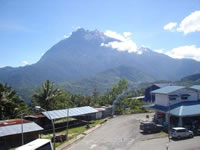 Shifting
cultivation covers most of the hills around here, and at kilometer
33 the roadside stalls of Pekan Nabalu are well stocked with local
produce. This is a regular tourist stop where a variety of good
quality handicrafts can be purchased as well as the deliciously
nutty flavored brown hill rice - a specialty of the area, together
with extra sweet pineapples. Shifting
cultivation covers most of the hills around here, and at kilometer
33 the roadside stalls of Pekan Nabalu are well stocked with local
produce. This is a regular tourist stop where a variety of good
quality handicrafts can be purchased as well as the deliciously
nutty flavored brown hill rice - a specialty of the area, together
with extra sweet pineapples.
At kilometer 29, at the turn-off to Kampung Kiau, the air is already
cooler and yellow daisies become increasingly common, scattered
through the grass at the edge of the road. Soon you pass the Kiau
Nabalu restaurant on the roadside, 6 kilometers (4 miles) from the
Kinabalu Park HQ, where there are good views of the patterned fields
of shift cultivation above the Kampung Kiau. If the day is clear
there are also excellent views of the long trailing waterfall of the
Kadamaian from here onwards to the Tenompok Pass. A rough road to
the right at the pass leads down to another historic village, Bundu
Tuhan, where the most famous of the mountain guides, Gunting bin
Lagadan, lived, well-known as a teller of tales and legends and now
the stuff of legend himself.
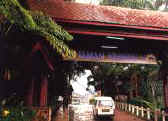 After
the kilometer 22 mark, at the Tenompok Pass, you cross over to the
main massif and within five minutes reach the impressive arched
entrance of the Kinabalu Park HQ. After
the kilometer 22 mark, at the Tenompok Pass, you cross over to the
main massif and within five minutes reach the impressive arched
entrance of the Kinabalu Park HQ.
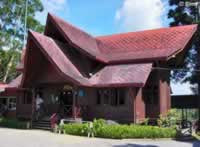 You
will arrive at Kinabalu Park HQ at about 10.00am. From here you can
see the mountain more clearly and closely. You can go to the
information center and get all the information about Mount Kinabalu
and Sabah Parks, know more about the flora of Mount Kinabalu in the
mountain garden guided walk or maybe go to their mini-theater to
watch video show about You
will arrive at Kinabalu Park HQ at about 10.00am. From here you can
see the mountain more clearly and closely. You can go to the
information center and get all the information about Mount Kinabalu
and Sabah Parks, know more about the flora of Mount Kinabalu in the
mountain garden guided walk or maybe go to their mini-theater to
watch video show about
Mount Kinabalu.

There are two restaurants and a small sundry shop in Kinabalu Park
HQ. You can have your meals in the restaurants and buy climbing
equipments in the shop. The shop provides only the very basic
climbing equipments used climbers. Liwagu Restaurant and Kinabalu
Balsam Cafe have a very nice food and ambiance, and they usually
open up until 10.00pm at night. The two restaurants serve both
western and oriental food and provides interesting settings inside
Kinabalu Park wherein to enjoy a meal along side the vistas of Mt
Kinabalu. You can also cook your dinner yourself in your hostel or
chalet. They have basic kitchen utensils for you to use.
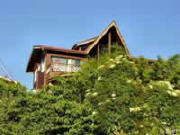 Accommodations Accommodations
Kinabalu Park accommodations range from private chalets for small
groups and families, to dormitories for the backpacker and
semi-luxury suites for honeymoon or romantic couples.
It is advisable to book a place to stay before one enters the park.
During the months of April, July, August and December, visits to the
park are popular and early bookings are necessary. Alternative
accommodations are available at Kundasang.
RELATED LINKS
|
Kinabalu Park trails that offer
treks to spectacular views and an opportunity for studying a cross
section of Kinabalu Park�s plant life and animal species at
close range
|
The springs are known
for their therapeutic properties and the waters with their
sulphuric minerals are reputed to ease aching muscles.
The Hot Springs - Canopy Walkway - Other Attractions -
Accommodations
|
The
highest mountain between the Himalayas and New Guinea.
The mountain - Park regulations - Accommodations -
Best time to
go
Mountain Trail &
Climb
Climb Tips & Necessities |
 Sabah Sabah
|
|