|
Pulau Tiga is an island
situated in Pulau Tiga Park, located about 35 nautical miles
southwest of Kota Kinabalu. Covering an area of 15,864 ha and was
gazetted as a National Park, The Pulau Tiga Park consists of the
main island of Pulau Tiga, Pulau Kalampunian Damit or better known
as �Snake Island� and Pulau Kalampunian Basar.

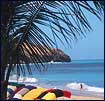
The main unique features are its beaches, the mud volcano, the
snakes on Snake Island, crab eating macaque monkeys, monitor
lizards, and notable birds like the eagle, hornbill and the illusive
megapode. The Island became popular as the main location for the
first ever series of the popular "Survivor" TV Programme.
Pulau Tiga is believed to have been formed by the eruption of
several mud volcanoes, which, with the combination of subterranean
gas pressure and expelled muddy sediment could have built up the
island to its present height of approx 100 m above sea level. Warm
mud still continues to ooze from these geothermal vents on the
island. Though it's mostly a low-lying island, Pulau Tiga's highest
peak is approximately 330 feet tall. The island is now about 2.8
miles long and 1 mile wide, with a total of eight square miles.

The island was initially developed as a marine research centre and
has several species of mammals, numerous birds a variety of reptiles
and amphibians and insects. Recognising the richness and importance
of the island, Sabah Parks has stationed its Rangers on the island
for the protection of the island rainforests, reefs and all
wildlife. The island is a sanctuary for the the very rare megapode (Megapodus
freycinet), a curious chicken-like creature that produces a cat-like
meow sound.
 There
is a network of trails, marked at 50 meter intervals, that leads to
various points of interest including the Pagong and Tagi beaches,
which were the actual site locations for the filming of Survivor.
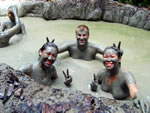
You can also indulge in a mudbath. The oozing of warm volcanic mud
on the island, which is packed with natural minerals, is said to
have healing properties for the skin, and also provides overall
rejuvenation for the tired body and mind. There
is a network of trails, marked at 50 meter intervals, that leads to
various points of interest including the Pagong and Tagi beaches,
which were the actual site locations for the filming of Survivor.
You can also indulge in a mudbath. The oozing of warm volcanic mud
on the island, which is packed with natural minerals, is said to
have healing properties for the skin, and also provides overall
rejuvenation for the tired body and mind.
There are two more islands in the Pulau Tiga Park, approximately 20
minutes by boat to the north of the main island, Pulau Tiga. They
are very different -
Kalmpunian Besar
This is a small sand cay built up from unconsolidated coral
fragments, and the shape of the island shifts and changes with the
prevailing monsoon winds and currents.

Kalampunian Damit
Also known as "Snake Island", is celebrated as a breeding ground
for the amphibious sea snake Laticauda colubrina, which comes to the
shores to lay eggs. The snakes can usually be seen coiled in a
tangled mass under boulders or among tree roots.
This type of sea snake, also known as the yellow-lipped sea krait,
is twice as poisonous as the deadly King Cobra and is capable of
killing a human with its venom in five minutes.

Visitors should make prior arrangements so that a guide can be
provided for the trip. Although the thought of getting close to the
amphibious snakes may be too close for comfort for some,
surprisingly these snakes are quite timid creatures that have the
habit of scampering away when approached.
Visits are possible any time of the year but the best time is during
the relatively drier months of March to July.
Dives & Marine Life
The resort offers PADI dive courses and many dive sites for the
novice and experienced divers including some unexplored dive
locations.

Pulau Tiga is also becoming a popular spot among avid divers and
underwater photographers who frequent the nine dive sites around the
island. The best time to dive is from March to October. The more
popular sites include Dunlop Shoal, Larai-Larai and the Light House.
 The
average diving depth here is 10 metres while the maximum depth is 25
metres. Many who frequent the island will boast of regular sightings
of lobsters, stingrays as well as various species of soft whip
corals in an array of fascinating colours. A rich variety of marine
life can be seen including nudibranchs, bamboo sharks, cuttlefish,
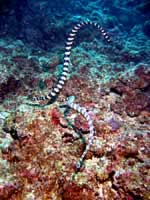
marbled stingray and of course, a visit to nearby �Snake Island�
guarantees sightings of banded sea snakes. The surrounding reefs are
shallow with healthy coral and water visibility ranging from 6m to
20m where one could snorkel and scuba dive among a kaleidoscope of
colors. These beautiful reefs contain over132 species of fish
representing 62 genera in 32 families. The
average diving depth here is 10 metres while the maximum depth is 25
metres. Many who frequent the island will boast of regular sightings
of lobsters, stingrays as well as various species of soft whip
corals in an array of fascinating colours. A rich variety of marine
life can be seen including nudibranchs, bamboo sharks, cuttlefish,
marbled stingray and of course, a visit to nearby �Snake Island�
guarantees sightings of banded sea snakes. The surrounding reefs are
shallow with healthy coral and water visibility ranging from 6m to
20m where one could snorkel and scuba dive among a kaleidoscope of
colors. These beautiful reefs contain over132 species of fish
representing 62 genera in 32 families.
Accommodations
The island has two resorts, Pulau Tiga Resort and Borneo Survivor
Resort
Pulau Tiga Resort
Offers Large deluxe chalets provide a comfortable stay for a family
of four, while the twin-sharing cabins are ideal for couples. For
those on a budget, there are comfortable longhouses
Borneo Survivor Resort
- 1 longhouse (6-8 sharing per room of 6 rooms with attached
bathroom per room) / 3 chalet units
NOTE
For day trippers, you will need to pre-arrange your food and
beverages the resorts only service in-house guests.
Permits are required - Visits (permits and overnight accommodation)
should be arranged through the Sabah Parks office (Kota Kinabalu). A
special permit is necessary to visit Pulau Kalampunian Damit. These
will be arranged the resorts when bookings are confirmed.
Getting There
Located south of Kota Kinabalu Pulau Tiga Park is reached by driving
the 140 km to Kuala Penyu, a small settlement on the tip of the
Klias Peninsula. From here it is another 18 km, or about 30 minutes,
by boat. Another way of getting there is by chartering a speed boat
from Kota Kinabalu and cruise to Pulau Tiga, or fly to Labuan Island
and charter a speed boat from Labuan.
|
|