� The Wildlife � The Seasons �
Getting There � The Tours � Conservation �
Stretching 560km from the Crocker
Range in the southwest of Sabah to the Sulu Sea in the east, the Kinabatangan
River sustains one of the
world's richest ecosystems.

The surrounding areas along the river consist of five distinct habitats -
dipterocarp or dry, waterlogged and limestone forests, and freshwater and
saline swamps. The lower basin of the river itself is the largest forest
covered floodplain in Malaysia and has the largest concentration of wildlife
in the South East Asian region.
The River and Wildlife
Most times, travellers to the Kinabatangan and Sukau make the effort to visit
because it simply is the only place in Sabah or even Borneo for that matter,
that the wildlife is so accessible. The Sukau / lower kinabatangan area is a
zoo safari and night safari all rolled into one. The diversity of this area is
unimaginable. There are a recorded 1000 plant species, 250 bird species, 90
fish species and reptilia and 50 mammal species cramped into the area.
 The
ecology of the upper reaches of the river has been severely disrupted by
excessive logging and clearing of land for plantations. However, the original
lowland forests and mangrove swamps near the coast have largely survived, and
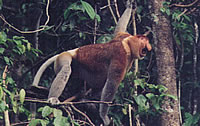
contain some of Borneo's highest concentrations of wildlife. Of special note
are Borneo's indigenous proboscis monkeys and orangutans, Asian elephants and
Sumatran rhinoceros. The area is also known for its great variety of birdlife. The
ecology of the upper reaches of the river has been severely disrupted by
excessive logging and clearing of land for plantations. However, the original
lowland forests and mangrove swamps near the coast have largely survived, and
contain some of Borneo's highest concentrations of wildlife. Of special note
are Borneo's indigenous proboscis monkeys and orangutans, Asian elephants and
Sumatran rhinoceros. The area is also known for its great variety of birdlife.
The Seasons
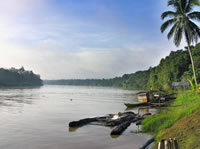
Each year, the lashing rains of the northeast monsoon cause the river to swell
rapidly. Unable to disgorge into the sea quickly enough, the river frequently
overflows its banks and spreads across the flat land of its lower reaches,
creating a huge floodplain. The lower Kinabatangan teems with both animal and
plant life, making it the best area for viewing wildlife, not just in Sabah
but all of Southeast Asia.
The Kinabatangan region can be visited all year round, though it is often
flooded during the wettest part of the year in December and January.
 The
main flowering and fruiting season, from April to October is generally fairly
dry and a good time to spot many birds and animals. During the northeast
monsoon, from November to March, there are often heavy showers during the
afternoons, particularly during December and January. During the rainy season,
however, it is possible to negotiate many of the river channels leading in to
the oxbow lakes, where there is a greater concentration of wildlife. The
main flowering and fruiting season, from April to October is generally fairly
dry and a good time to spot many birds and animals. During the northeast
monsoon, from November to March, there are often heavy showers during the
afternoons, particularly during December and January. During the rainy season,
however, it is possible to negotiate many of the river channels leading in to
the oxbow lakes, where there is a greater concentration of wildlife.
Getting There
There are generally 2 ways to go about getting to Sukau area, one is by boat
all the way which may take 2hours meandering up the languid river or the other
is to take a 1 hour van or car ride on rough palm oil plantation roads to the
jetty and then a 10 � 15min boat ride to the resort. It is however advisable
that if you are pregnant or if you have a bad back, not to travel on the
plantation road. The road condition is atrocious due to the rain and heavy
vehicle use and 45km at 20km/hr of this travel will definitely be a painful
affair if you are not accustomed to it.
The Tours
Currently, most nature tourism is concentrated around Sukau, accessible by
road and offering comfortable accommodation to visitors prepared to pay for
well-managed tours. Normally, just to make the trip a little easier, many take
the tours out and stay a day or two at resorts., homestays and hostels along
the Kinabatangan river. The itinerary is is normally as follows -
 The
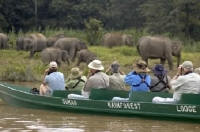
first day will be the menanggol river trip. This small tributary of the great
kinabatangan is where visitors will get to see a variety of birds, snakes,
monkeys and if lucky � the elephants and orangutans. Animals hang around water
sources for the food. The fig trees that grow along riverbanks are a favourite
source of food and their succulent fruit is highly sought after by all
creatures� great and small. The
first day will be the menanggol river trip. This small tributary of the great
kinabatangan is where visitors will get to see a variety of birds, snakes,
monkeys and if lucky � the elephants and orangutans. Animals hang around water
sources for the food. The fig trees that grow along riverbanks are a favourite
source of food and their succulent fruit is highly sought after by all
creatures� great and small.
On the second day, a boat ride down to the oxbow lakes for a bit of bird and
croc watching is a good idea. It gives the visitor a perspective of the type
of habitat found at the lower kinabatangan. As a floodplain, the area can be
unforgiving and can also be a source of life. The river has about 30 oxbow
lakes and more ancient ones that have silted up by the natural change of river
course. There are a few oxbow lakes that is host to a myriad of nature�s
treasures and it all depends on luck � being there at the right time.
Conservation
In areas so fragile and so effected by human activity such as the lower
Kinabatangan river, it is crucial to look into responsible tourism and each
individual who has the privilege to visit and be part of this ecosystem even
for a day has a responsibility to retain a piece of it not only in memory and
pictures but also in participation. With help and recognition from all sides,
then will life at Kinabatangan be preserved.
There are a few conservation programmes conducted by individuals who live
or/and make a living from the area such as the Miso Walai Homestay and
Sukau Rainforest Lodge.
Sukau Rainforest Lodge endeavors to reforest and rehabilitate the forest
around the resort by planting a variety of saplings of species familiar to the
 plains.
They also involve their guests in this tree planting exercise. Every visitor
staying at the resort gets to help plant a sapling in a 64 hectare riverine
land at Tenegang. plains.
They also involve their guests in this tree planting exercise. Every visitor
staying at the resort gets to help plant a sapling in a 64 hectare riverine
land at Tenegang.
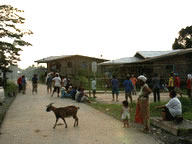
Miso Walai Homestay is under a community cooperative that helps the poor,
indigenous rural community living in the Batu Puteh area and also carry out
wetland restoration work in the surrounding floodplain forests of the Lower
Kinabatangan.
|
|