|
� Marine Park � Diving in Redang � Diving in Kapas � Diving at Pulau Perhentians �
� Diving at Tenggol � Diving in Lang Tengah & Pulau Bidong �
Dive sites are very varied, from
current swept rocks close to Perhentians and Bidong, to the gentle
slopes covered with sea anemones around Redang and to underwater mounds
in Lang Tengah. All these places also have excellent house reefs that
are good for night dives or snorkeling. Reefs around most dive sites
rise from the sandy bottom at around 60ft to top off at about 20ft.
Although shore based diving is the norm here, there are also live-aboard
options which cover many of these popular dive sites and which offer a
different sort of dive experience. Dives are selected according to one's
experience and requests.

For those who are not divers but are eager to find out what it feels
like, they can sign up for a discovery dive available at most dive
centres where qualified instructors will bring you on a escorted dive in
shallow waters. The whole experience lasts about an hour. If you like
it, you can get certified as a NAUI, PADI or SSI diver as we offer dive
courses (you'll need to stay about 3-4 nights for basic open-water
certification).
March and April is especially good for diving where visibility can hit
40m. Some months may present greater opportunities to catch glimpses of
certain marine life. For example, green turtles nest in their greatest
numbers in August while September is probably the best month to spot
migratory whale sharks.

Redang Marine Park
In Peninsula Malaysia, there are no less than a hundred dive sites
scattered around its Marine Parks, most of which are found in the east
coast, Especially the islands off Terengganu.
The Pulau Redang Marine Park, which is located about 20km off the shore
of Terengganu, s made up of the area around a group of islands namely
Pulau Redang, Pulau Pinang, Pulau Lima, Pulau Ekor Tebu, Pulau
Perhentian Besar, Pulau Perhentian Kecil, Pulau Susu Dara, Pulau Lang
Tengah and Pulau Kapas.
Click on the headings for more
info
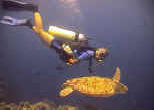 Diving
in Redang Diving
in Redang
With diving depth rarely exceeding 20 meters and being favorable to
divers of all level, Redang is one of the most popular diving
destination in Peninsular Malaysia. Sites here include Pulau Lima which
is in a class of its own and the reefs to the west of Batu Chipor which
has some of the largest aggregations of anemones found anywhere.
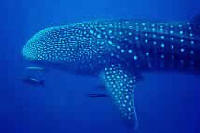 Diving
in Kapas & Gemia Diving
in Kapas & Gemia
Includes the islands of Kapas and Gemia, the key attraction is the World
War II shipwreck located 5 nautical miles offshore. Northwards, about an
hour from Pulau Kapas, this 50-year-old Japanese landing craft wreck
sits upright. Her anti-aircraft guns lie at the bow, carpeted with
growth of soft corals and sponges. Frequent encounters with whale sharks
at this site.
Diving in Tenggol
Tenggol features a dramatic drop-off on the eastern side of the island
to 48ft and offers more than 20 stunning dive sites. Most sites bottoms
out at 30 metres with large rocky outcrops and boulder-like terrain
dominating the seascape. Divers will be able to choose their type of
diving, ranging from the relaxing to the more demanding sites.
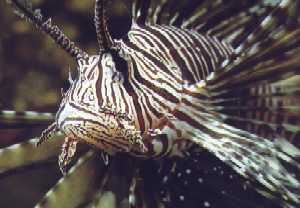 Diving
in Lang Tengah Diving
in Lang Tengah
There is a good deep dives here dropping down to 30 meters with big
shoals of snappers, fusiliers and rabbit fish. A thermo cline often
drops the visibility which can be up to 30 meters.Trawler wrecks are
also aplenty off Pulau Bidong, scuttled by the marine department for
illegal fishing within Malaysian waters. These wrecks are homes to
lionfish and large groupers. Sometimes, black tip sharks swim by to
check out divers.
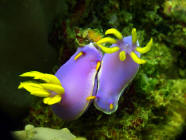 Diving
at Pulau Perhentians Diving
at Pulau Perhentians
There are about 20 dive sites at Perhentian, spread across the two
islands. Night divers exploring the sandy bed of the shallow channel
between the two islands may encounter nocturnal sea shells. On the
northernmost island of Pulau Perhentian is a pinnacle, Susu Dara. Here,
steep sloping sides are carpeted with colourful soft corals, table
corals, sponges and whip corals. You can observe anything from
nudibranchs, molluscs, anemone clownfish and pelagics in the open water.
Whale sharks are also frequently sighted feeding around this pinnacle.

travel - guide - sightseeing - information - travel guide - tours - visitors guide
- places of interest
|
|

