| Booking Formats |
| TOURS |
| TRANSPORT |

| Go2TravelMalaysia.com |
| HOME PAGE |
| TOURS & TRAVEL |
| TRANSPORT SERVICES |
| MAPS |
| ABOUT US |
| TRAVEL TOOLS |
| Malaysian Calendar |
| Currency Converter |
|
Malaysia Travel Guide |
|
About Malaysia Johor Kedah Kelantan Kuala Lumpur Labuan Melaka N. Sembilan Pahang Penang Perak Perlis Putrajaya Sabah Sarawak Selangor Terengganu |
|
||||||||||||||||||||||||||
|
� The Islands � Diving � When to Go � Climate & Weather � � Getting There � Marine Park � Travel Tips �
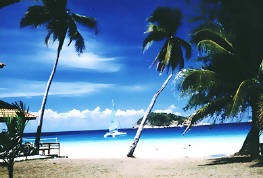
As long as you love the sun, sand and sea, anywhere you stay in these islands promises a relaxing, enjoyable holiday. The true charm lies in
the white sandy beaches, clear waters and rich diversity of marine life. Click on the highlights for more info
The Perhentian group of Islands here refers to the Islands of Pulau Perhentian Besar & Pulau Perhentian Kecil, Pulau Redang,
Pulau Bidong, Pulau Kapas, Pulau Lang Tengah and Pulau
Tenggol.
Dive sites are very varied, from current swept rocks close to the Perhentians and Bidong to gentle slopes covered with sea anemones around Redang to underwater mounds in Lang Tengah. All these places also have excellent house reefs that are good for night dives or snorkeling
WHEN TO GO limited to the period between April and October. Outside this, the seas
can be very rough and most accommodations are closed
Some months may present greater opportunities to catch glimpses of
certain marine life. For example, green turtles nest in their greatest
numbers in August while September is probably the best month to spot
migratory whale sharks.
CLIMATE & WEATHER and relative humidity between 80-87%.
May is usually the hottest month and January the coolest. usually begin after the first week of November and are characterized by heavy rain spells lasting 2-3 days duration accompanied by strong winds and rough seas. Usually there will be a few of these rain spells, bringing rainfall up to 615 mm in December versus 120 mm in April. In between these rain spells, weather is usually fair with little rain and seas are calm. So it is possible to enjoy good weather if you happen to visit during such calm periods, though bear in mind you'll have to stay at Berjaya resort as it is the only resort open throughout the year.
The best way is to get to Kuala Terengganu or Kota Bharu and proceed to the respective jetty terminals to connect the boat ferry to the island you intend to visit By Boat / By Road / By Train / By Air / Getting Around on the Islands
The Marine Park is made up of the area around a group of islands namely Pulau Redang, Pulau Pinang, Pulau Lima, Pulau Ekor Tebu, Pulau Perhentian Besar, Pulau Perhentian Kecil, Pulau Susu Dara, Pulau Lang Tengah and Pulau Kapas
DO
NOT BUY any souvenirs made from corals, shells and other marine animals such
as starfishes. Anyone found in possession of such items will be fined
RM5,000. If the villagers don't know better, advise them not to exploit
their environment. Even dead corals - the bleached ones sometimes found
washed ashore should be left where it is found.
TRAVEL TIPS For all their beauty, the Perhentians remain a bit of an up-and-coming
attraction and there are
some missing bits in the infrastructure to be aware of:
The only place on the
islands where you can get a cash advance or exchange money is the
Perhentian Island Resort, which charges accordingly. There are no power supply to the Islands. Generators provide most of the electricity on the islands. Power outages are not uncommon and in many cheaper chalets power is only provided at night
Can be a nuisance after it rains. Bring repellent and consider burning a mosquito coil (available locally), especially if your bed does not have a mosquito net.
Generally not safe to drink. Bottled water is widely available
at a fairly expensive RM
3-5 per 1.5L bottle. Conservation There are concerns that the coral reef will be gone in as little as ten years because of the intensive tourism industry.
But as long as you take
care and do not pick the living coral you will not be contributing to
that directly.
|
|
|||||||||||||||||||||||||