|
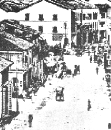
Kuala Lumpur (Meaning Muddy
Estuary) was founded in 1857 by a group of 87 Chinese who poled their
way up the Klang river in search of tin.

It was in Ampang, few miles to the east, where there were huge reserves
of it, that the prospectors landed their supplies. They named it "muddy
confluence," and built a ramshackle, thatched-roof village. However
within a month all but 17 of them had died of malaria. More tin
prospectors, however, soon followed, and within a few years the village
thrived.
 Populated
almost exclusively by men, they spent their days in grueling labor,
crouching over tin pans or digging the earth, returning to the town at
dusk to console their loneliness in bars, gambling halls, and brothels.
Few got rich, but throughout the peninsula the mania for tin inspired
fierce rivalries and claim disputes. The Chinese miners soon organised
themselves into clans and warring factions called "secret societies."
Without a centralised authority, keeping peace and order in the mining
areas was nearly impossible. In 1868, needing a solution to the chaos,
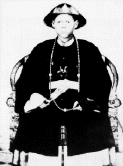
the headmen of the local clans elected a man named Yap Ah Loy as "Kapitan
China," or leader of the Chinese community. Populated
almost exclusively by men, they spent their days in grueling labor,
crouching over tin pans or digging the earth, returning to the town at
dusk to console their loneliness in bars, gambling halls, and brothels.
Few got rich, but throughout the peninsula the mania for tin inspired
fierce rivalries and claim disputes. The Chinese miners soon organised
themselves into clans and warring factions called "secret societies."
Without a centralised authority, keeping peace and order in the mining
areas was nearly impossible. In 1868, needing a solution to the chaos,
the headmen of the local clans elected a man named Yap Ah Loy as "Kapitan
China," or leader of the Chinese community.
With the support of the local sultan, he built prisons and quelched
revolts, quickly establishing an infamous reign over the entire Kuala
Lumpur mining area. If KL has a "founding father," it is Loy. Loy had
barely established control, however, when the Malay Civil War broke out
a few years later. Local sultans were fighting for the throne of Perak,
and KL being swept up in the conflict, was burnt to the ground.
  The
merchants of the Straits Settlements, concerned that the war would ruin
their prosperity, asked Britain to intervene. Britain was initially
reluctant to get involved with internal politics, but rumors that the
merchants would turn to Germany instead sparked a fear in London that
Britain could lose its tin interests in Malaya. The
merchants of the Straits Settlements, concerned that the war would ruin
their prosperity, asked Britain to intervene. Britain was initially
reluctant to get involved with internal politics, but rumors that the
merchants would turn to Germany instead sparked a fear in London that
Britain could lose its tin interests in Malaya.
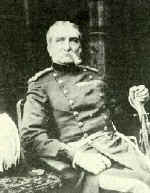 London sent in a new territorial governor, Andrew Clarke, to apprise the
situation. Clarke gathered the feuding princes aboard his ship off the
island of Pangkor, and convinced them to sign a document known as the
Pangkor Agreement. The Agreement ended the war, established a new Sultan
of Perak, and -- most significantly � called for the presence of a
British Resident "who must be asked and acted upon on all questions
other than those touching Malay religion and custom. London sent in a new territorial governor, Andrew Clarke, to apprise the
situation. Clarke gathered the feuding princes aboard his ship off the
island of Pangkor, and convinced them to sign a document known as the
Pangkor Agreement. The Agreement ended the war, established a new Sultan
of Perak, and -- most significantly � called for the presence of a
British Resident "who must be asked and acted upon on all questions
other than those touching Malay religion and custom.
This was the beginning of a dramatically increased British involvement
in Malaya, one that would eventually place Kuala Lumpur at center of
history. The British residential system quickly spread. Frank Swettenham,
the Resident of Selangor, chose Kuala Lumpur as his administrative
centre.
|
|