� Religions � the Language �
Music and Dance � Cultures � Guidelines on the Do's & Don'ts �
A variety
of religions and cultures found in Malaysia is a direct reflection of the
diversity of many ethnic groups and races in Malaysia.
   
Religion
Islam is the national religion,
but freedom of religion is
guaranteed. Malays are
usually Muslims. The Chinese are predominately
Taoists and Buddhists, though
some are Christians. The majority
of Malaysia's Indian population are mainly Hindu and originate from southern India, though a sizable percentage are
also Muslims and
Christians. They are also Sikhs, mainly in peninsular Malaysia. Many indigenous people of east Malaysia have converted to Christianity
although others still follow their animist traditions.
The
Language
Malaysia's
official language is Bahasa Malaysia, or Bahasa Melayu (Malay). You can also get along quite happily with English throughout
Malaysia. English is, along with the Bahasa Melayu, the linking
language between the various ethnic groups.
Other everyday languages include Chinese dialects such as
Cantonese, Hakka, or
Hokkien.
The
Indians also speak Tamil, Malayalam, Hindi, or other Indian languages.
It
is reasonable to say that the Malays control the government while the
Chinese have their fingers on the economic sector of Malaysia and the
Indians mainly in the service sectors.
 Music
& Dance Music
& Dance
Malaysian
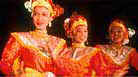
music is heavily influenced by Chinese and Islamic forms. Music is
based largely around the Gendang (drum), but includes percussion
instruments some of which are made of shells, flutes, trumpets and gongs.
Malaysia has a strong tradition of dance and drama, with Thai,
Indian and Portuguese influences. Other artistic forms include
Wayang
Kulit also called shadow-puppets, Silat which is a stylized martial art, and crafts such as
batik, weaving, silversmithing and brassware.
Cultures
The
convergence of people and cultures within Malaysia is rooted in the golden era of
the Malacca sultanate which attracted merchants from far regions of
the world such as: China, India, the Middle East and Europe. Intermarriage of Malays with
Chinese and others sprang
the Baba-Nonya and Chetty communities as well as the Portuguese
Eurasian community. The British, in their bid to exploit the rubber and
tin industry in Malaysia brought in workers from
India and China. They all brought with them the cultures of
their motherlands. Mutual tolerance, acceptance and celebration
of each other's cultures embodies the essence of
Malaysia.
Guidelines
on the Do's & Don'ts
Please
take off your shoes when entering a place of worship or a Malaysian
home.When
in the presence of a dignitary, officials or elders, it is impolite to
cross your legs with the sole of your shoes facing the person. If
you are hosting a meal and your guests include Muslims, avoid
liquor and dishes which contain pork. If your guest is an Indian
Hindu, avoid serving him beef.
Shaking hands is acceptable, but kissing of the hand or cheek
should be avoided. Many Muslim women, especially those who cover their heads, prefer not to shake hands with members of the opposite sex.
In such a situation, a simple nod and smile is sufficient.
Malaysians
generally respect their elders and will not confront, antagonise or
openly disagree with them. Visitors
are expected to be modestly dressed especially in the conservative rural
areas (especially the Northern half of the East Coast areas of Peninsula
Malaysia of the country). It is considered impolite for guests to wear
shorts to a place of worship or a function, except to a beach party.
But
then, as with most things, times are changing, some for the better and
some for the worst. Its best to use one's judgment according to
the situation
and
place and listen to the locals.

information - details -
regarding
|
|