� Bullock Cart Ride � Cuisine � Souvenirs &
Crafts � Trishaw Ride � Getting There �
The historical melting-pot of
cultures and races � Malay, Chinese, Chitty's, the Baba's, and Nyonya's
and the Portuguese. The Eurasian community still speaks a dialect from the
16th century that only they can understand.
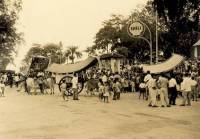 Bullock Cart Ride Bullock Cart Ride
Bullock carts were one of the earliest forms of transportation in the
country. The driver and passengers sat in the front section of the
two-wheeled vehicle and goods were placed in the back. Traditionally used
to transport bulk quantities of agricultural products like padi and straw,
bullock carts were also used for garbage collection in major towns before
World War Two. But it was no ride in the park. The cart driver was often
at the mercy of the stubborn animals. When they were overworked, no amount
of persuasion could make them continue the journey. More often than not,
the driver had no choice but to wait patiently until the beasts were ready
to move again. Bullock carts were said to have been introduced by Indian
traders during the Malacca Sultanate. Once the means of transportation for
the rich in Melaka. The features that separate the bullock cart in Melaka
are the pointed roof in the shape of the horn of a bull, trappings and
colours. Tourists in Malacca can still go for a ride in a gaily-decorated
traditional bullock cart (kereta lembu).
Cuisine
Since the state has Portuguese, Dutch, Chinese and Indian influences,
Melaka food is quite unique Nyonya food, a combination of Chinese and
Malay cooking styles, is a fovourite with many people. Among the common
dishes are achar, sambal, duck soup with salted vegetables, jantung pisang
(banana shoots) and crab meat cooked in coconut sauce (ketam lemak). In
fact many dishes cross ethnic borders and are served in most households.
The devil kari, for instance is of Portuguese origin and is a spicy
chicken dish. Portuguese food is generally sourish and hot since a lot of
chilli is used. As many Portuguese in Melaka are involved in the fishing
industry, fish plays an important part of their diet. In Melaka there is a
local version of the popular satay dish called satay celup. It consists of
prawns, squid, cockles, pork and vegetables skewered on a stick and cooked
in a pot of hot bubbling satay sauce. The Kueh koci is made of glutinous
rice flour filled with grated young coconut and cooked in a rich syrup of
gula melaka. It is wrapped in banana lead and then steamed.
Souvenirs & Crafts
Songket is noteworthy, along with tekat, golf embroidery on fabric.
Melaka, rich in history, is also a fantastic place to hunt for antiques,
curios and ancient handicrafts from another time.
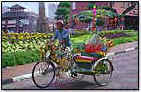 Trishaw
Ride Trishaw
Ride
The best way to enjoy Melaka Town in a laidback manner. The trishaw will
take you to streets and corners of Melaka of which you would miss out if
you decided to strike out on your own.
Getting There
Melaka is only 144km from K. Lumpur and express buses travel regularly
from all major towns in the country. There is also a ferry service from
Dumai in Indonesia and Melaka.
|
|